


Sustainability at Einhell
Vision, Motivation & Self-Image
We align ourselves with the pillars of sustainability
We align ourselves with the three pillars of sustainability: Environment, Social, and Corporate Governance. In these areas, we systematically address our impacts and responsibilities, developing measures that are integrated into our day-to-day business operations.
Environment
E – Environment
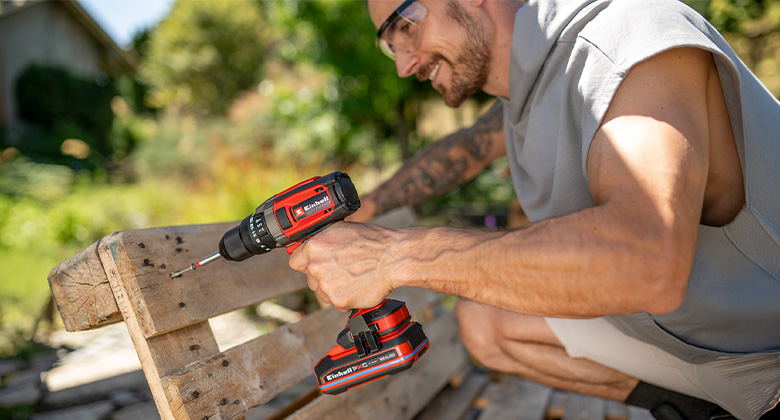
In the area of Environment, we work on using resources efficiently, focusing more on closed-loop systems, and making energy flows more transparent. This includes topics such as repairs, spare parts availability, take-back systems, the use of materials, as well as energy and mobility projects at our locations.
- Power X-Change & Resource Efficiency
- Repairs & Factory Seconds
- Spare Parts for 10 Years
- Energy & Buildings
- Mobility & Logistics
Social
S – Social
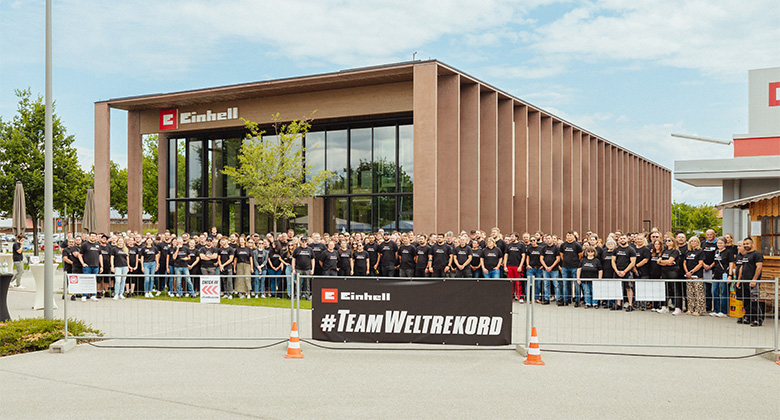
In the Social sector, the safety and ongoing development of our employees, dialogue with stakeholders, and social commitment are our core focus. We promote skills development starting right from apprenticeship level, ensure safe working conditions, and support initiatives and projects that benefit people in various life situations.
- Corporate Culture Guidelines & Leadership Principles
- Stakeholders
- Further Training
- Engagement
- Charitable Campaigns (Licht ins Dunkel, RTL Telethon, and RTL Children's House)
Corporate governance
G – Governance
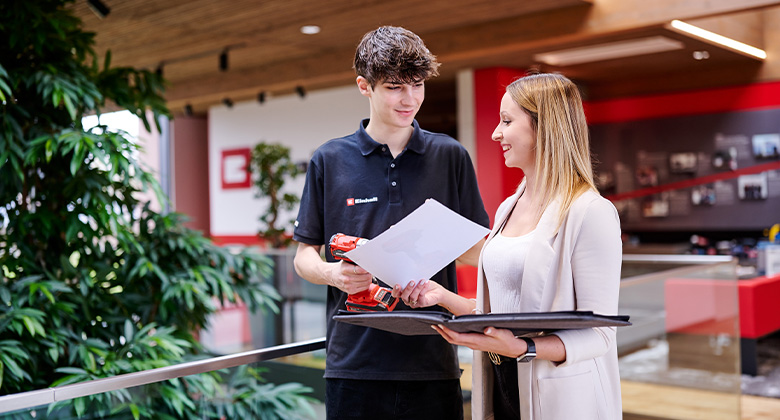
The Governance pillar encompasses the principles of responsible corporate management. This includes our group-wide Code of Conduct, clear guidelines throughout the entire supply chain, systematic risk management, and structures to ensure compliance with legal and internal regulations. These elements create transparency and form the framework for responsible action across all business areas.
- Code of Conduct
- Supplier Code of Conduct
- Risk Management
- Compliance System
What responsibility means to us
For us, responsibility means creating transparency across our processes. We integrate environmental, social, and corporate criteria into our daily decisions. Our actions are guided by our objectives in the areas of Environment, Social, and Governance (ESG).
With our Power X-Change battery platform, over 350 tools can be operated using the same battery type. This helps to reduce the total number of batteries needed compared to systems with individual batteries for each tool.
At our central repair centre in Landau an der Isar, we repair over 100,000 tools every year to extend their service life. In addition, standardised testing procedures ensure that our products meet defined requirements for performance and durability. To close the material loop, we work with specialised partners on processes for recovering raw materials from old batteries.

Einhell products are developed with the goal of using resources as efficiently as possible, for example through constructive weight optimization and the use of modern motor technologies such as brushless technology. This technology is characterized by an energy-efficient operation and a longer service life compared to brushed motors.
A central quality feature of Einhell products is their design, which is engineered for longevity. All products are developed and tested according to defined minimum requirements regarding their service life. This supports long-term use by consumers.
Einhell offers a variety of warranty extensions. Upon registration, our customers can extend the warranty on Power X-Change products or batteries by an additional year to a total of 3 years, and on brushless motors to a total of 10 years.

Virtually every Einhell product can be repaired, which is why we guarantee spare parts availability for at least 10 years after the end of series production. This potentially reduces the need for new tools.

All Einhell Power X-Change products are backward and forward compatible. This means that every Power X-Change tool can be operated with any PXC battery variant. Consequently, if one of the two components becomes defective, the other can continue to be used without restriction.

As early as the design phase of Einhell products and packaging, we take recyclability aspects into account, for example through the selection of suitable materials and designs. This can support the subsequent processing of materials into secondary raw materials. We are also working on reducing and further developing packaging material. With regard to the recovery of raw materials from discarded batteries, we cooperate with specialized partners.
Secondary raw materials are already used in the majority of our product packaging. By doing so, we continue to utilize existing materials and contribute to a resource-conserving approach to packaging materials.
Our Values
Fairness, Diversity & Reliability

Einhell is committed to fair working conditions throughout its own value chain. This includes a respectful working environment, safe workplaces, as well as transparent and reliable frameworks. We ensure that work is performed under conditions that protect the health, safety, and dignity of our employees and enable long-term cooperation.

Einhell stands for equal treatment and equal opportunity. All employees should receive the same opportunities, regardless of gender, age, origin, religion, worldview, disability, or sexual identity. Through respectful interaction and fair processes, we foster a working environment where diversity is valued and individual potential is supported.

Einhell works continuously to identify and reduce risks within its own business processes and throughout the supply chain. Through clear structures, responsible decision-making, and proactive planning, we support stable and reliable business development. This allows potential impacts on employees, partners, and customers to be minimized at an early stage.

Einhell aligns itself with internationally recognized labour standards. These particularly include principles on occupational safety, fair working conditions, non-discrimination, as well as respect for fundamental employee rights. These standards form an important foundation for our actions and support responsible cooperation with employees and business partners.

Respect for labour rights is an essential part of our responsibility. Einhell places great importance on compliance with legal requirements and internal principles. This includes, among other things, fair working hours, safe working conditions, protection against discrimination, and the promotion of freedom of association (works councils). In doing so, we create the foundation for a trusting and responsible working environment.

Einhell is committed to fair and appropriate compensation. Wages and salaries are intended to comply with respective legal regulations and adequately reflect the performance of our employees. Through transparent and reliable compensation structures, we contribute to expressing appreciation and fulfilling our social responsibility as an employer.

Einhell is convinced that satisfied employees are an essential foundation for long-term corporate success. An appreciative working environment, development opportunities, and reliable frameworks foster motivation, engagement, and performance. This not only strengthens individual satisfaction but also supports the productivity and innovative strength of the company.

Our Path to Greater Responsibility
Our Sustainability Reports
Responsibility in Action
Our Measures for Resources and the Environment
Repair & Longevity
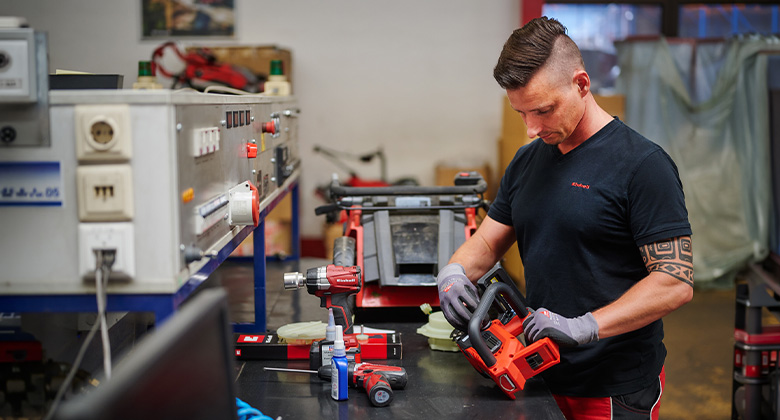
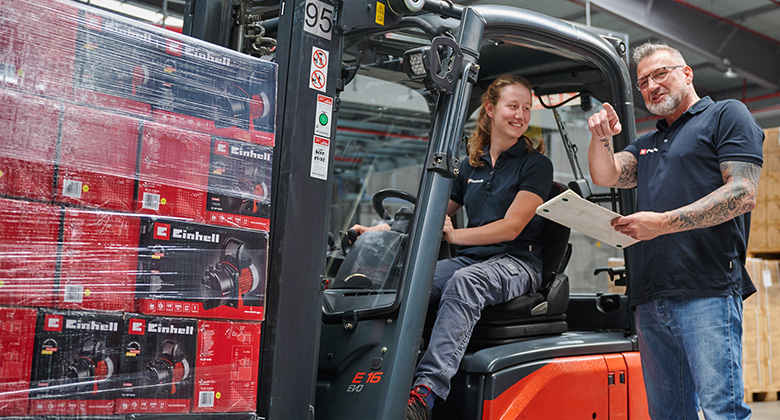
For us, responsibility means optimizing the service life of your tools through targeted service offerings. Our specialized repair teams at our Landau location and within our international subsidiaries repair a large number of devices every year—in Landau alone, this amounts to more than 100,000 units. Through these repairs, we jointly reduce the need for new equipment and conserve valuable resources. To ensure you can rely on your tool for the long term, we keep a vast range of spare parts available for you for at least 10 years after the end of series production.
Circular Economy & Second-Choice Program
To effectively close material loops, we take ecological criteria into account as early as the design phase of our products and packaging. Our focus here is on a recycling-friendly design as an important prerequisite for the subsequent processing and reuse of materials. Furthermore, we promote continuous use over disposal: functional returns and repaired devices are offered as second-choice products. We also deliberately continue to use these devices in our own workshops to make the best possible use of their remaining service life.
Energy & Infrastructure
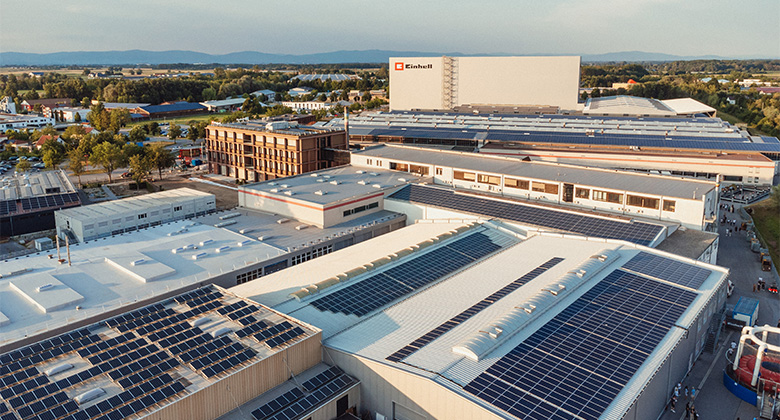
Sustainable action also guides our logistical and operational processes. In logistics, we rely on concepts such as e-trucks and Giga-Liners to minimize transport emissions, while consistently driving forward the electrification of our vehicle fleet. Our infrastructure follows clear sustainability standards as well: our new office building at the Landau location was constructed in accordance with DGNB (German Sustainable Building Council) guidelines. To further increase our energy efficiency, we utilize electricity from our own photovoltaic systems and are currently in the process of establishing a site-wide energy management system.
Initiatives
Science Based Targets & Make it Zero
Einhell has joined the Science Based Targets initiative (SBTi) as well as the Make it Zero initiative (MiZ). This emphasizes Einhell’s commitment to contributing to the reduction of greenhouse gas emissions and taking responsibility for its impact on the environment and climate.
- International Organisation
- Founded by CDP, the UN Global Compact, the World Resources Institute (WRI), WWF, and the We Mean Business Coalition
- Supports companies and financial institutions worldwide in developing science-based targets to reduce greenhouse gas emissions
- Targets aligned with the 1.5 °C goal of the Paris Agreement
- Contributes to the global goal of achieving net-zero emissions by 2050 at the latest
- Provides clear standards, practical tools, and independent validation of climate targets
❱❱ Einhell has committed to developing emission reduction targets in line with climate science. The company’s commitment and progress can be viewed on the SBTi Target Dashboard.
- Global Industry Initiative by the Trade Associations EDRA (European DIY Retail Association) and GHIN (Global Home Improvement Network)
- Specifically aimed at the DIY and home improvement sector
- Objective: To systematically identify, reduce, and ultimately neutralise indirect greenhouse gas emissions across the entire value chain that fall under Scope 3 emissions*
*Scope 3 emissions: Indirect emissions that occur outside the company, for example during the production, transport, or use of products.